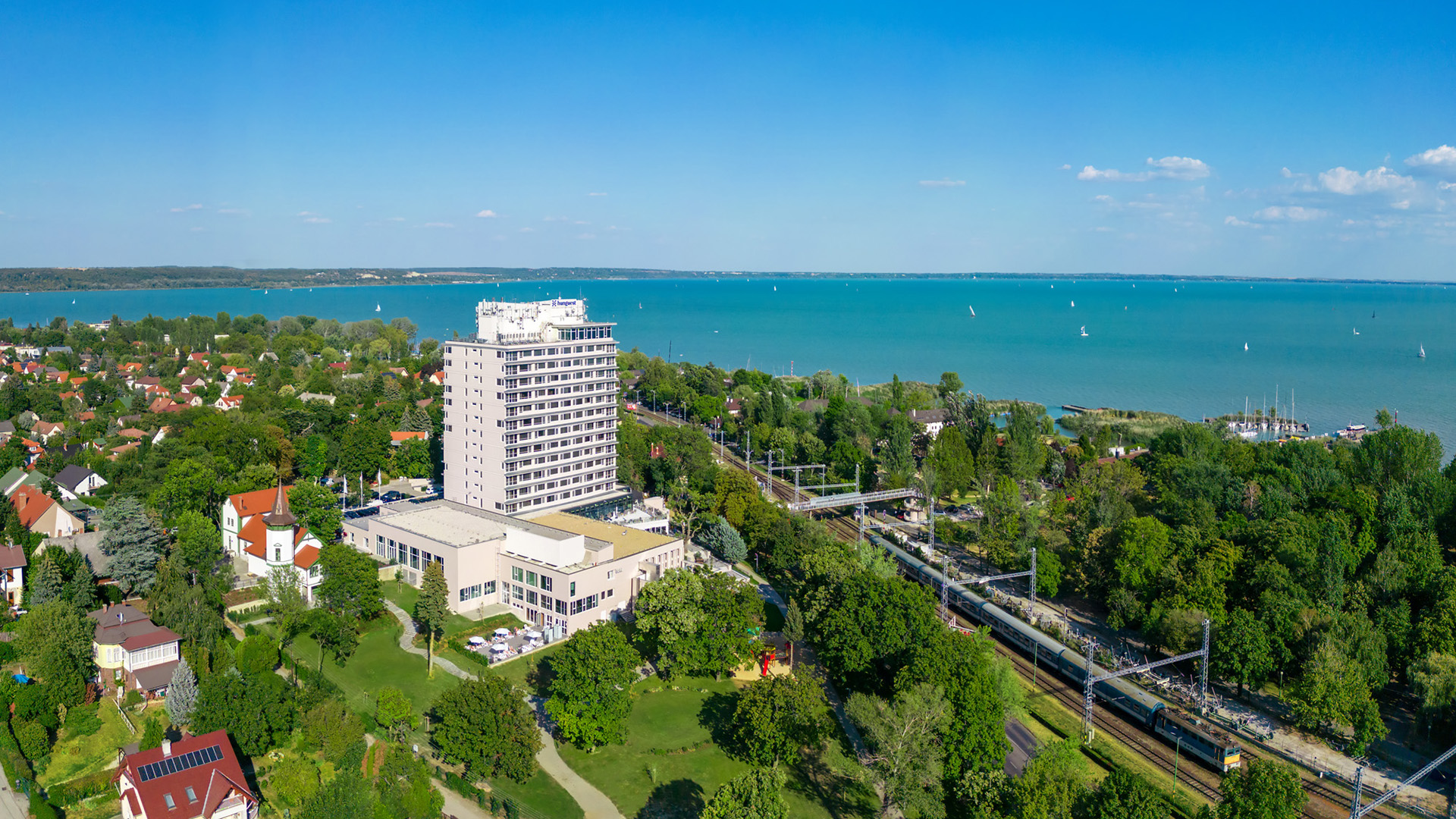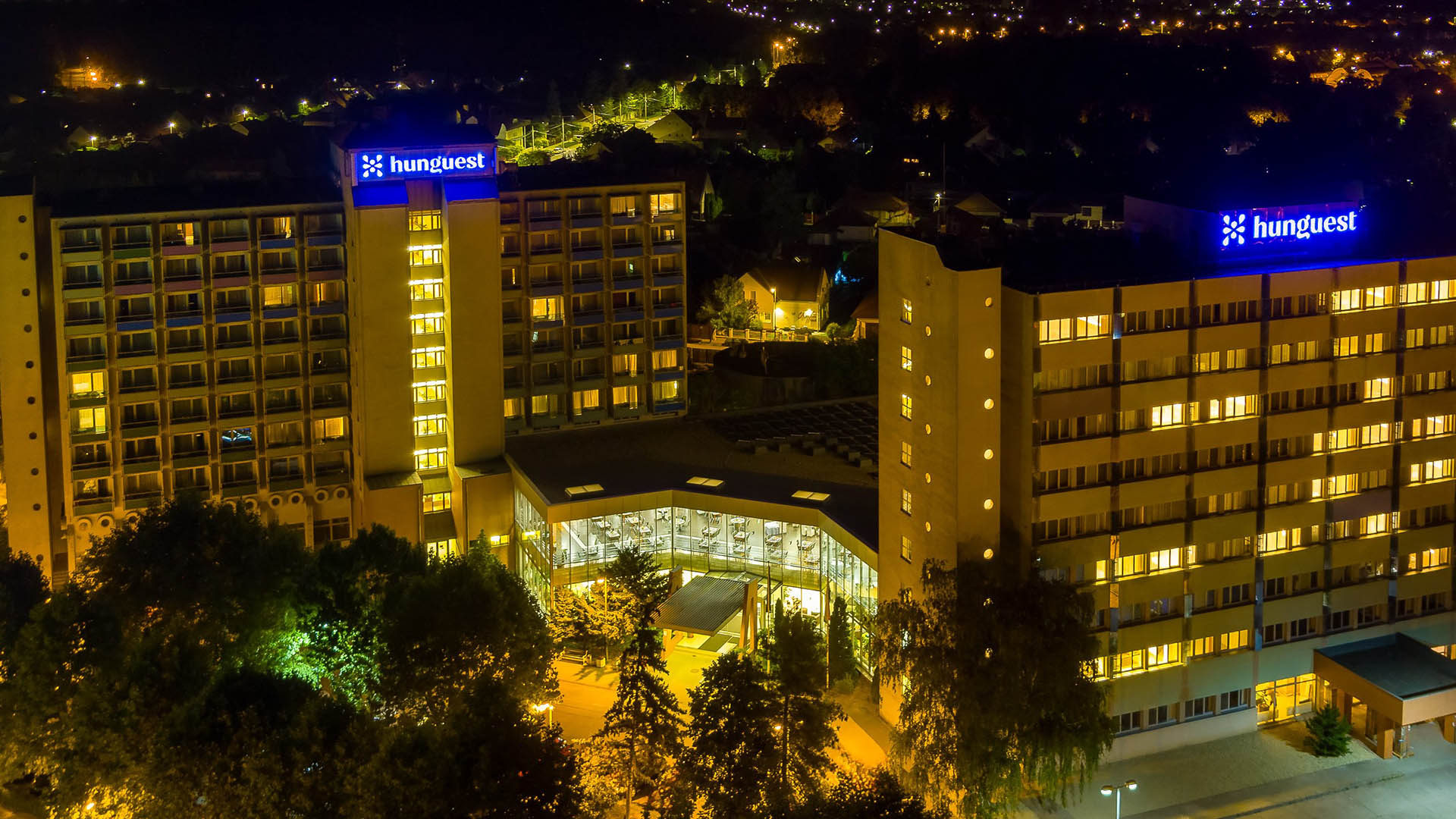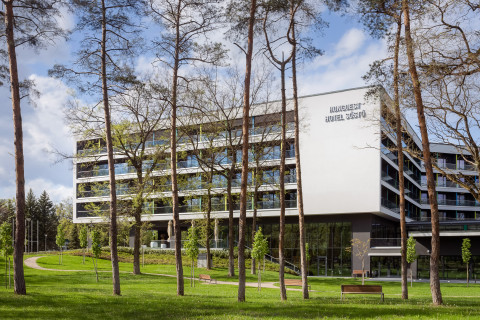
H-3234 Galyatető, Kodály Zoltán sétány 10.
Tel.: 37/576-576 Fax: 37/376-015
grandhotelgalya@hunguesthotels.com
Eger is a city built on hills, replete with history, and with many sides to it, so that there is something to suit everyone’s tastes. It offers tradition and romance, steeped in its long history, a castle, a basilica, countless churches, fine wrought- ron gates, frescoes, and a museum and library full of priceless objects, but it also has swimming-pools, open-air lidos, and hills and valleys around, where delightful excursions can be made. All these pleasant and rewarding visits, attractions and excursions can be summed up and dwelt upon at leisure in the evening, at one of the many picturesque wine cellars in the Valley of the Beautiful Lady (Szépasszony-völgy) over fine wines that warm the heart and mind, not just the gullet. Prospectuses and books tell you more about the sights of the town.
Szilvásvárad lies in Western Bükk, 358 metres above sea level. The most precious monument is the Reformed round church, as white as snow, designed by Ferenc Povolni and built around 1825 in Classicist style. The Museum of the Lippizaner stud (Park u. 8.) tells you the story of the Lippizaner. Open: Tue-Sun 9 a.m. - 12 noon, 1 p.m. - 5 p.m.
Information: Tel.: +36 36 564-400
Szalajka-völgy, well-known for a rich flora and fauna, is open to the public all year round. Take the forest train from the village centre to Fátyol Falls, aptly named so (‘fátyol’ is ‘veil’). Walk further from the falls to reach the Cave of Istállóskô, dwelling place of the prehistoric man. Take a walk back to the village and see how much more there is to see: the trout lakes as well as the outdoor and indoor museums of forestry are worth visiting.
Museum of forestry:
Open:
1 Nov-15 April: Mon-Sun 8.30 a.m.-2 p.m.
16 April-1 May: Mon-Sun 8.30 a.m.-4.00 p.m.
1 May-31 Oct: Mon-Fri 8.30 a.m.-4.30 p.m.
Sat.-Sun: 10 a.m.-6 p.m.
Information: +36 36 355-112/109
Egerszalók, a village part of the Eger historic wine region, lying 6 km from Eger, is the home of blue grapes from which Egri Bikavér is made, and other white grapes. The main attraction of the village is the hot spring, discovered in 1961 when instead of crude oil, which was sought after, thermal water of 69°C welled up from the depth. Where water runs down the hillside, natural steps, white, yellow, grey and red, have been formed by the thick deposition of salt. The thermal water contains calcium-magnesium-hydrocarbonate and sodium. The water was proved medicinal by a study in 1990.
Open: all year round, 6 a.m.-1 a.m.
Information: +36 30 476-5736; +36 36 515-300
If you opt for angling rather than bathing in the hot spring, the nearby lake is excellent for you.
The village of Sirok is overlooked by a protected hill, Várhegy, where you will see the ruins of a fort. This peak is a favourite destination offering a wonderful panorama of Mátra and Bükk. Services: mini golf (Petôfi u. 9., Tel.: +36 36 498-131). In Sirok, you will also find cave dwellings, remnants of the past, most of them in Széchenyi Street.
In Recsk, a typical peasant house of the Mátra awaits you (Kossuth u. 116.).
Open:
Mon-Fri 8 a.m. - 12 noon
Sat-Sun: fix an appointment
Information: Mayor’s Office, Tel.: +36 36 478-444
The early 1950s were a dark period in the life of the village: between 1950-53, the state security department had a forced labour camp here, modelled after the Soviet ‘gulag’. The camp was a ‘top secret’ of Rákosi’s dictatorship, to be closed down by Prime Minister Imre Nagy. A memorial park paying homage to victims of the forced labour camp of Recsk has taken the place of it.
Open:
1. May-30. Oct.: Mon-Sun 9 a.m.-5 p.m.
1. Nov.-30.April.: Sat.-Sun.: 9 a.m.-5 p.m.
Information: +36 36 478-295; +36 20 435-0581
Mátra, Kékestető, Mátrafüred
The name of Mátra, highest mountain range in Hungary, sounds familiar to everyone. Coming from the plains, you will reach the vineyards on the sunny southern slopes while from the north, the first impression is romantic hills where once outlaws roamed. Climb the steep rising peaks and walk the creek valleys. Volcanic acidic springs, crystal clear air and abundant sunshine are good for body and soul. The forests of Mátra have something new to show every season. In the valleys, villages await you with fine accommodation and local delicacies. Kékestetô, 1014 m (3326 ft.) is the highest
peak in Hungary. Those who are fond of hiking or spending a few hours or even days at a mountain resort will find it an ideal place. In winter, it is skiers’ paradise. There is a look-out tower on the hilltop, open all year round. Climb to the top of it and you will feel you are on the top of the whole country. (Entrance fee)
Information: +36 37 367-086
Mátrafüred has a Palotz ethnographic private collection and a doll exhibition (Pálosvörösmarti u. 2.). 29 dolls are dressed in everyday wear or gala dresses, after the inspect of the best of Palotz peasant craft you can also try spinning and weaving.
Open: All year round: Mon.-Sun. 9 a.m. - 5 p.m.
Information: +36 37 320-137
Gyöngyös, city of 35 thousand, is the ‘capital’ and gate of Mátra. It lies in wonderful settings, therefore, it is not only the town’s cultural heritage, matchless in many respects, that makes it a place worth visiting but also the beauty of the surrounding land. The city is centred around Fô tér (the main square), upgraded in 2000. The Castle of the Orczys houses the museum of Mátra (Kossuth L. u. 40.), second largest collection of natural scientific objects in the country. Centuries of Gyöngyös, the exhibition on the ground floor, tells about the past and present of the town and vicinity through finds from the age of the Conquest, special tombstones from Kisnána and many more objects from centuries ago, giving an insight into how people, mainly engaged in pottery, vine-growing and wine-making used to live and work long ago. In 1917, the town was devastated by a fire, which is documented by photographs, melted glass objects and many more. On the first floor, visitors are shown how the Mátra Mountains were formed, also, the amazing diversity of plants and animals is illustrated. The collection of minerals as well as fossilised plants and animals includes the skeleton of a huge mammoth found in Mátraderecske, the only one in Hungary that survived intact. Dioramas show the life of the forest: here, deer, wild boar and roes are displayed, while in the forest, many of these can only be seen from shooters’ high-stand. The last part of the collection includes shooting guns, trophies and works of art on shooting and hunting.
The Museum of Mátra is closed – on account of renewal – till June 2007
Open:
1 March-31 Oct: Tue-Sun 9 a.m. - 5 p.m.
1 Nov-28 Feb: Tue-Sun 10 a.m. - 2 p.m.
Information: +36 37 311-447
The treasury of Szent Bertalan church is the second largest ecclesiastic collection in Hungary. It is displayed in Almássy
House. The Holy Crown of Hungary was in custody here three times between 1806-1809. The collection included gold and silver work, books, sculptures and vestments.
Open: all year round, Tue.-Sun.:
10a.m.-12.00 noon;
2 p.m.-5p.m.
Information: +36 37 500-446
The monumental library of the Franciscans in Gyöngyös is unique in many ways. This is the largest and only monastery of the order in Hungary where the library is kept at its original place (except for Pannonhalma). The books, many of them survived in one copy, are invaluable. After World War II, monks walled in the most precious volumes to protect them, which was discovered as late as a few years ago, by chance, when the monastery was being rebuilt. In the museum, not only books but also bookcases are genuine. Surprisingly enough, the glazed doors of bookcases also remained intact. In the entrance hall of the library, you will find an exhibition on how Franciscans live.
Open: Tue-Fri. 2 p.m.-4 p.m., Sat. 10 a.m. - 1 p.m.
Information: +36 37 311-361
The building of the town library (Fô tér 10.) houses Hermann Lipót standing exhibition, which presents the works of art painted by the great artist, awarded the Kossuth Award, which the artist demised to the town.
Open:
Mon-Wed 9 a.m.-6 p.m., Thu closed,
Fri. 9 a.m.-6 p.m., Sat. 9 a.m.-1 p.m.
Information: +36 37 311-883
Markaz, Abasár, Nagyréde, Gyöngyössolymos, Gyöngyöspata
The villages Markaz and Abasár lie east of Gyöngyös. The Fort of Markaz was built in the 13th century, no wonder little of it remained. Instead, the peak offers a magnificent view of the land, which makes it worthy of climbing even for those who expect a real fort. Do not leave the village without visiting the ethnographic collection (Fô út 138.) in a traditional village house built in the late 19th century. Furniture dates from the 1920s-30s, also, traditional costumes and children’s toys are exhibited. It cannot be visited because of renovation for an indefinite time.
Information: +36 37 363-612
In Abasár, do not miss the exhibition on the history of vine-growing in Kapás House. Also, tomb stones from the 11th century are displayed here.
Open: all year round, Mon.-Fri.: 11 a.m.-5 p.m. At other times, fix an appointment.
Information: +36 37 360-182
Sámuel Aba, after the defeat at Ménfô in 1044, was roaming around here. His burial place is supposedly in a cellar at Aba tér 56.
Open: Mon-Thu 7 a.m.-4 p.m., Fri 7 a.m.-1 p.m.
Information: +36 37 360-052, 360-016
In the middle of the village, you will find cellars carved in rock, where the delicious wines made from grapes grown on volcanic soil are kept. With a little bit of luck, you will have a chance to taste them.
Gyöngyössolymos has a church of unusual appearance, with a tall tower that served as watch tower during the Turkish rule.
In the village of Nagyréde, west of Gyöngyös, a house where serfs used to live (Erzsébet tér 1.) and a village gallery (Kossuth u. 1., in the library) are the main sights. Serf house
Open: all year round, fix an appointment
Information: House of Culture, Fô u. 4., +36 37 373-588
In the gallery, the works of art of József Molnár, 20th century painter, are exhibited.
Open:
Tue, Fri 8 a.m.-12 noon, 1 p.m.-6 p.m.,
Mon, Wed, 1 p.m.-7 p.m.; Thu 1 p.m.-6 p.m.
Information: Tel./Fax: +36 37 373-588
Gyöngyöspata lies west of Gyöngyös. Here, the RC church, built in the 15th century at the request of Matthias, great king of Hungary, has an artwork, the Jesse tree altar, matchless in Europe.
Parádsasvár, Parád, Parádfürdő
Parádsasvár has a glass works (Parád Kristály Manufaktúra Kft., Rákóczi u. 46-48.) where the showroom and the workshop, where glass-blowing can be observed, are open to the public for guided tours. In the factory shop, products are for sale.
Open:
Mon.-Fri.: 9 a.m.-1 p.m., 1.45a.m.-
3 p.m., Sat.: 9 a.m.-1 p.m.
Information: Tel.: +36 36 544-362
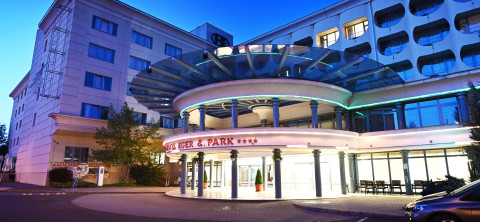
There are two masterpieces of architecture here: the Károlyi Castle in Parádsasvár, today a hotel, and Park Hotel Elizabeth in Parádfürdô, designed by the prominent engineer Miklós Ybl.
In Parád, you should not miss the woodcarving collection by Joachim Asztalos (Hársfa u. 6.). The exhibition was opened by his wife, who will keep you entertained while you are watching the exhibition including wood carvings, sculptures, statuettes and reliefs. Key is by the caretaker
Information: +36 36 364-092
There is also an exhibition on the history of village life in Palotzland in Parád (Sziget u. 10.) where ancillary buildings also survived.
Open: All year round: Tue.-Sun.: 9 a.m.-3 p.m. At other times fix an appointment.
Information: +36 36 364-893
Ilona-völgyi Falls, falling from a height of 10 m (33 ft.), highest of the three in the country, is Ilona Stream welling up as two little springs supplied by Tôkés-kút and streaming across the bluffs of Marhád (606 m, 1988 ft.) and Cserepestetô (734 m, 2408 ft.) to fall from the last cliff after streaming through one of the most charming valleys of Mátra. The cliff is the end of a 60 m (196 ft.) wide basin, which is most beautiful if you come from Sándor-rét. You will be bewitched by the 20-30 m (65-98 ft.) tall beech trees and rocks scattered like gravel.
Parádfürdô takes pride in a medicinal water collection (Kossuth u. 221.) of 350 bottled medicinal and mineral waters
from 25 countries.
Open: all year round, fix an appointment: Mon.-Fri. 7 a.m.-3 p.m.
Information: Parádfürdô Hospital, Tel.: +36 36 544-800
In the Coach Museum in Cifra Stable (Kossuth u. 217.), coaches, horse-driven sleighs and dresses from the history of
coach driving in Hungary are displayed.
Open:
1.April.-30. Sept.: Mon.-Sun. 9 a.m.-5 p.m.
1.Oct.-31.March.: Tue.-Sun. 9 a.m.-4 p.m.
Information: +36 36 544-073
|
|